Bird droppings are acidic and bake onto glass in sunshine, leaving a hard crust that a quick rinse will not move. Because droppings are opaque, even a small patch can shade a cell completely. Lichen is a slower problem: it starts as small grey, white or yellow-green spots, usually along the bottom frame where moisture lingers, and it grips the glass and the frame seal. Moss can then grow from the frame edge onto the panel surface.
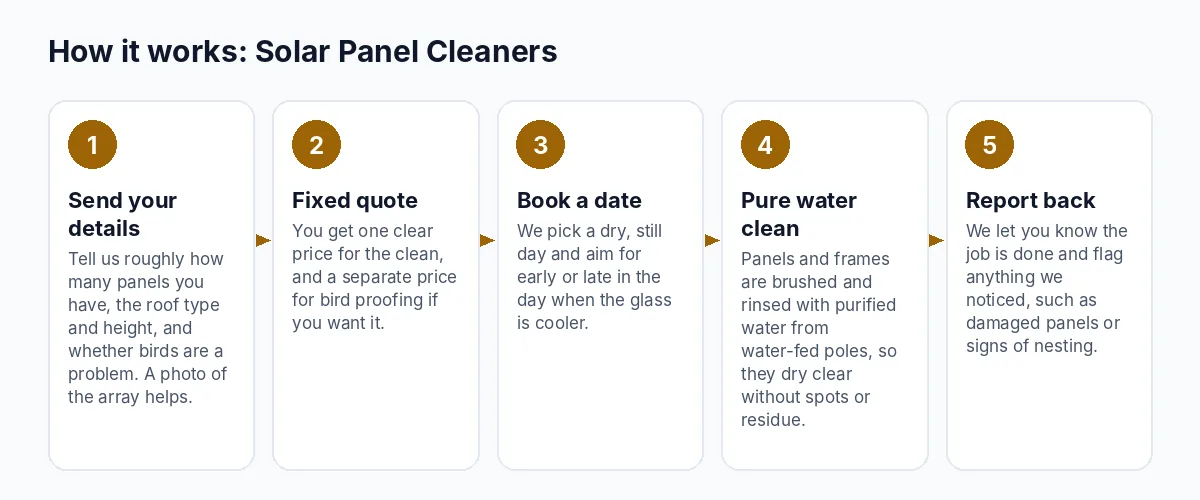
Removing this kind of soiling safely is a matter of time rather than force. The marks are soaked with purified water to soften them, then worked repeatedly with soft brushes until they lift. Scrapers, blades, scouring pads and pressure washers are avoided because they can scratch the glass or its anti-reflective coating, which permanently reduces how much light reaches the cells. Some lichen leaves a faint mark even after removal, which is cosmetic and has little effect on output.
What is included
- Pre-soaking of droppings, lichen and moss with purified water to soften them
- Repeated soft-brush agitation on the worst areas rather than scraping
- Clearing moss and debris from the gap between the bottom frame and the glass
- Removing leaves, twigs and loose nesting material sitting on the panels
- Full pure water wash and rinse of the rest of the array
- An honest note of any staining or etching that cannot be removed without risking the glass
- Advice on whether bird proofing would stop the fouling returning
Who it is for
- Panels with patches of bird droppings that rain has not moved
- Arrays with lichen spots or moss growing along the lower frame
- Low-pitch, shaded or north-facing roof sections that stay damp
- Properties close to trees, rooftop gulls or pigeon roosts
- Panels that have not been cleaned for several years
How much does it cost?
As a guide, heavy fouling or lichen removal usually adds around £20 to £60 to a standard domestic clean, so many homes pay roughly £100 to £220 in total. Very heavily fouled arrays may need a second visit, which a cleaner should tell you about when quoting. See our full cost guide.